
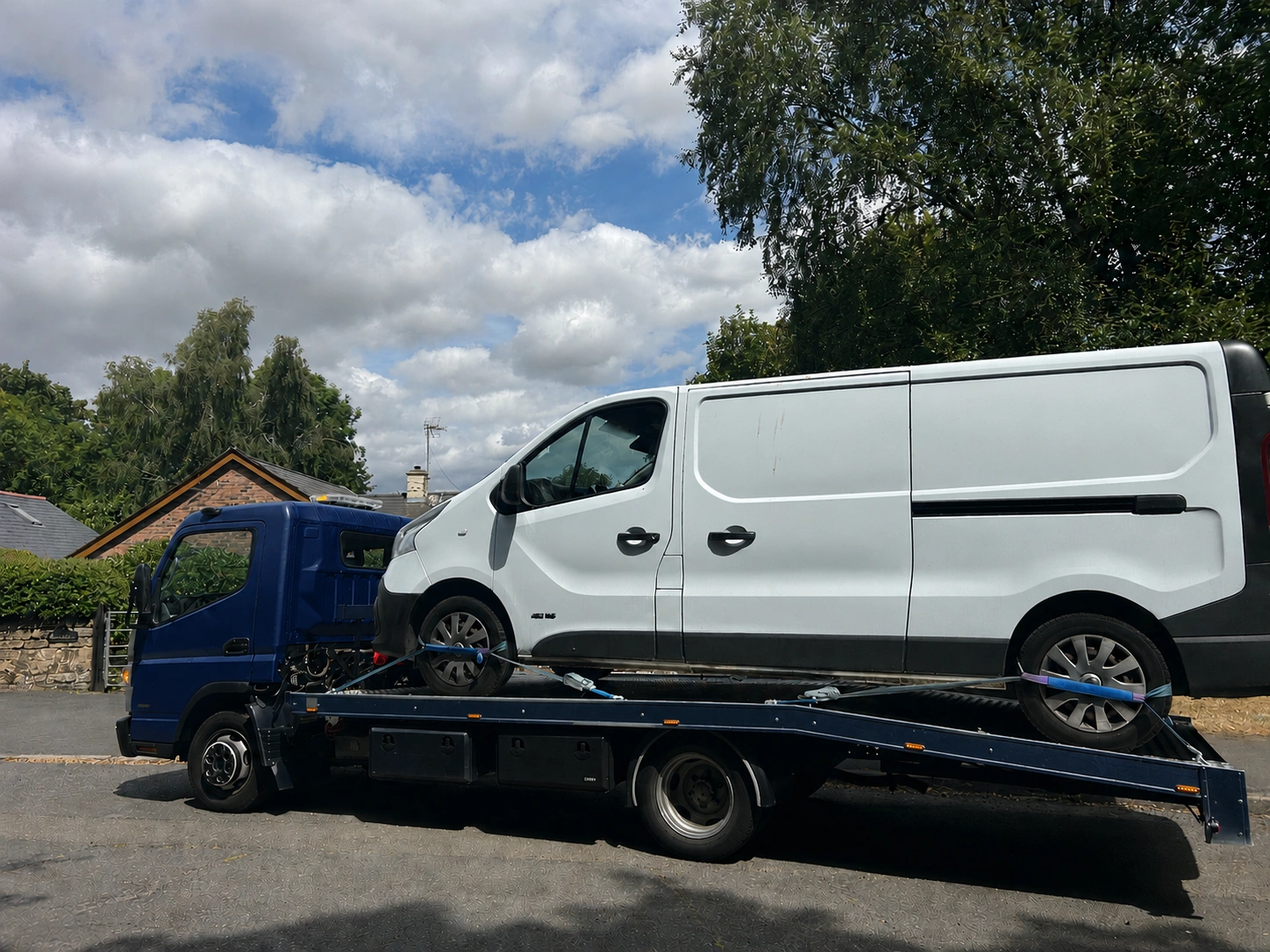
Van Recovery Sheffield for SWB, MWB & LWB Vans
Professional van recovery, van towing, roadside assistance and nationwide van transport for broken-down, accident-damaged and non-running commercial vehicles. We arrange suitable recovery for small vans, panel vans, high-roof vans, long-wheelbase vans, crew vans and many specialist commercial vehicles.
- Broken-down van recovery
- Local and long-distance towing
- 12V and 24V jump starts
- Winching and difficult loading
- Auction van collections
- Garage and workshop delivery
Compare Multiple Van Recovery Quotes
Complete the form below to receive suitable van recovery price and ETA options from available verified partner drivers. We help with SWB, MWB and LWB van recovery, van towing, breakdown transport, non-runners, auction collections, jump starts and nationwide commercial vehicle transport.
Please provide your van make and model, registration number, pickup postcode, drop-off postcode, number of passengers and whether the van starts, drives, rolls, selects neutral and releases its handbrake. Include details of damaged wheels, locked brakes, missing keys, accident damage, restricted access or heavy contents.
*Prices and arrival times are estimates and are not guaranteed. The final quote depends on distance, van size, weight, condition, access, equipment, traffic and partner availability.
Fast local response may be available in Sheffield, depending on driver location, traffic, van size and recovery requirements.
Selected short-distance, straightforward van recovery jobs may start from £120 when the van rolls and access is suitable.
Compare price and ETA options from available verified partner drivers and choose the most suitable recovery quote.
Prices and arrival times are estimates, not guarantees. Final quotes depend on distance, vehicle size, weight, condition, access, equipment, traffic and driver availability.
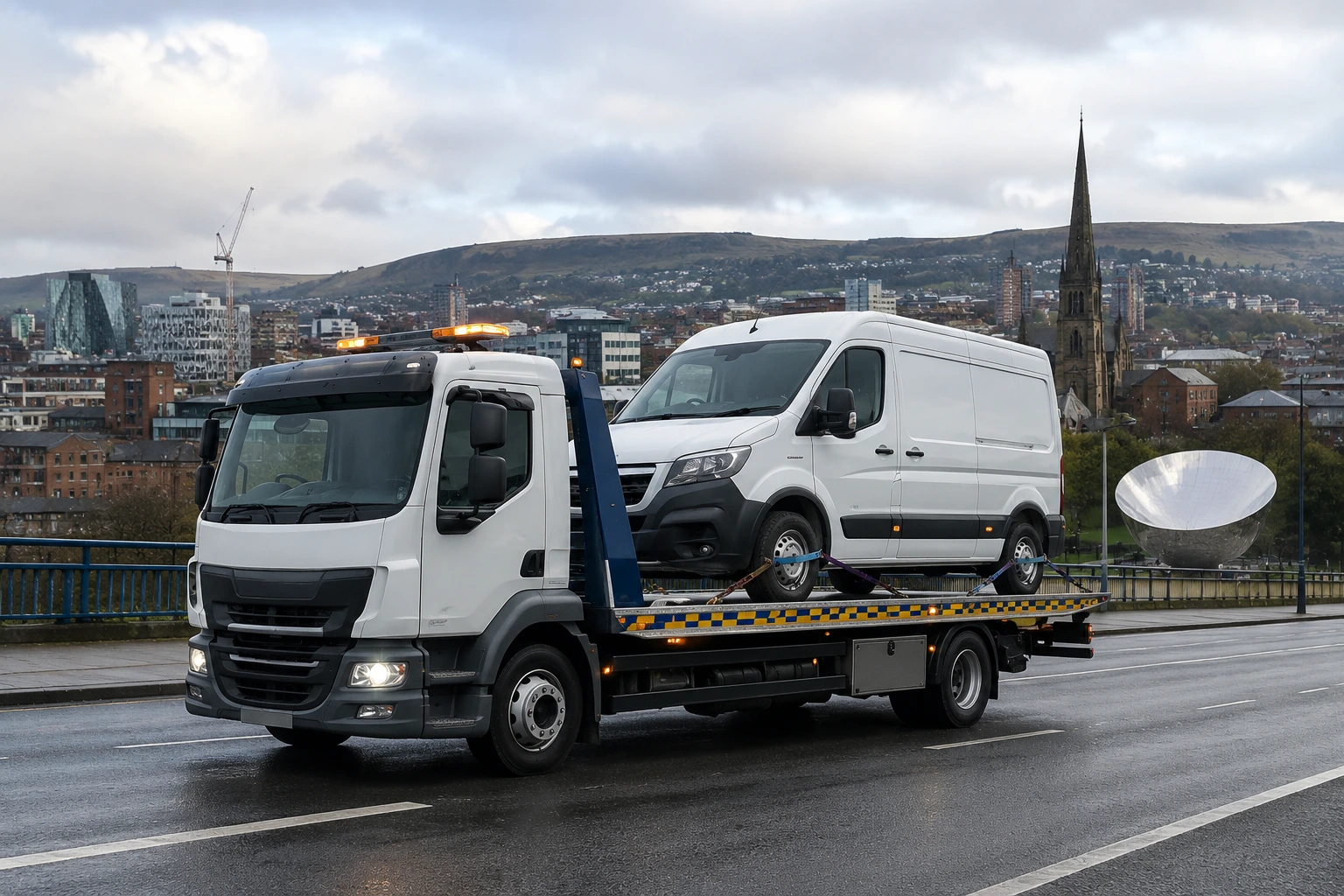
Professional Van Recovery Sheffield
When a working van suddenly stops, the disruption can affect far more than one journey. Tradespeople may miss appointments, delivery drivers can lose a full route, businesses may have staff waiting and families can be left in an unsafe roadside position. Our van recovery Sheffield service is designed to connect customers with suitable towing and transport support for a wide range of commercial vehicles.
We cover emergency breakdown recovery, planned van transport, garage delivery, workshop collection, home-to-garage movements, accident recovery, auction collection and long-distance vehicle delivery. Assistance can be arranged from residential streets, depots, building sites, warehouses, retail parks, motorway service areas and other accessible locations throughout Sheffield and South Yorkshire.
Customers commonly search for “van recovery near me”, “van towing Sheffield”, “tow truck for van Sheffield”, “commercial vehicle recovery Sheffield” and “24-hour van recovery Sheffield”. The important point is not simply finding the nearest truck; it is finding a truck that can legally and safely carry the van. Vehicle length, roof height, axle weight, payload, wheel condition and overall access all affect the correct recovery method.
Our booking process focuses on these practical details before a driver is assigned. This allows better matching for short-wheelbase vans, medium-wheelbase vans, long-wheelbase vans, high-roof vans, crew-cab vans, tipper vans, refrigerated vehicles and other specialist bodies.
SWB, MWB and LWB Van Recovery in Sheffield
Van size is one of the most important parts of arranging safe transportation. Wheelbase describes the distance between the front and rear axles, but customers often use the terms SWB, MWB and LWB to describe the overall category of their vehicle. The precise dimensions vary between manufacturers, so the make, model and body type should always be confirmed.
Short-wheelbase vans such as many Citroën Berlingo, Peugeot Partner, Ford Transit Connect, Volkswagen Caddy and Renault Kangoo variants. These compact vans are commonly used by local trades and delivery businesses.
Medium-wheelbase panel vans provide increased load space while remaining manageable in urban areas. Correct bed length, rear overhang and vehicle weight still need checking before transport.
Long-wheelbase vans require greater care with loading angle, deck length, rear overhang and weight. Suitable transport may involve a larger recovery truck or trailer.
Extra-long, high-roof and heavy-duty vans may exceed the limits of a standard 3.5-tonne recovery truck. Full dimensions and weight are required before accepting the job.
Vehicles with additional seating can have different weight distribution and specifications. Passenger requirements must also be agreed before dispatch.
Luton vans, box vans, tippers, dropsides, refrigerated vans and welfare vans require detailed checks because their height, weight and rear construction can change transport options.
Why LWB van towing requires the correct equipment
A long-wheelbase van can be too long or too heavy for a standard car transporter. Even when the quoted unladen weight appears acceptable, tools, stock, racking, fuel and fitted equipment may increase the real weight significantly. The rear of the van may also extend beyond the recovery bed, changing the loading balance and approach angle.
Before arranging LWB van recovery Sheffield, customers should state whether the vehicle is empty or loaded. Heavy contents should normally be removed where safe and practical. The driver may request photographs, dimensions or a weight estimate. For larger vans, a purpose-built commercial recovery vehicle or trailer may be necessary.
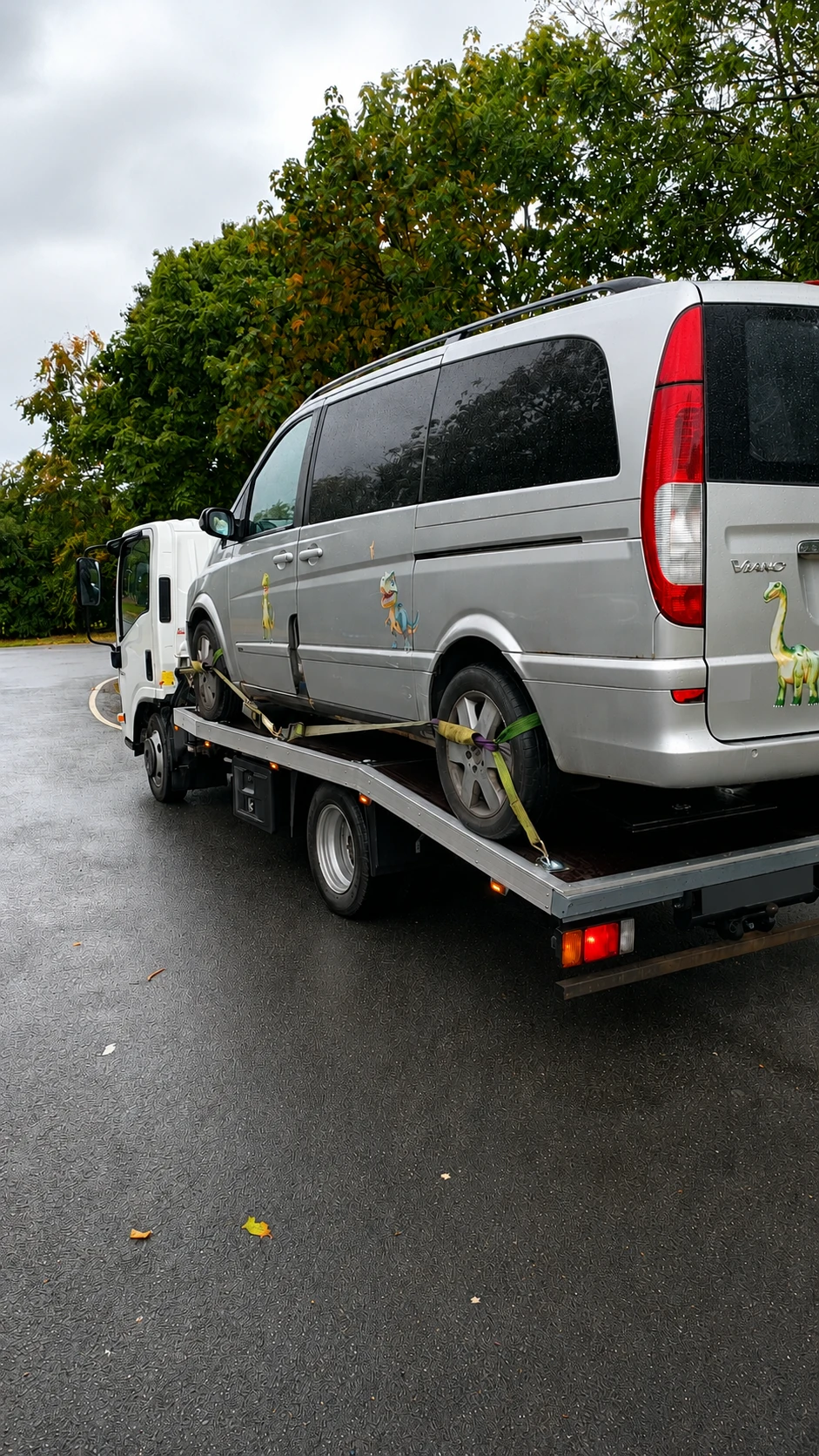
Van Recovery for All Major Manufacturers
We arrange van towing and recovery for most mainstream commercial vehicle brands, subject to the individual vehicle’s dimensions, weight, condition and access. The model list below covers many commonly recovered vans, but it is not exhaustive. Different generations and body configurations can vary considerably, so accurate booking details remain essential.
Whether your vehicle is a small city van, a standard panel van, a long-wheelbase work van or a high-roof commercial vehicle, the recovery decision is based on the actual vehicle rather than the badge alone.
Model availability depends on the vehicle’s exact body, wheelbase, weight and recovery condition.
Emergency Van Towing and Roadside Recovery
A van breakdown can happen without warning because of battery failure, alternator faults, clutch problems, overheating, tyre damage, fuel system faults, electrical issues, engine warning lights or accident damage. When roadside repair is not possible, safe recovery to a home address, garage, dealership, depot or workshop is often the most practical solution.
For emergency van recovery Sheffield, share the safest available location information. A postcode may identify the general area, while a live map pin, motorway marker, service-area name, junction number or what3words reference can improve accuracy. Never stand in a dangerous traffic lane to take photographs or inspect the vehicle.
If the breakdown is on a motorway or high-speed road, follow official safety guidance, move behind a barrier where possible and contact the emergency services when there is immediate danger. Recovery arrangements should only be discussed once everyone is in a safer position.
Transport from a home, driveway or private parking area when the van will not start or cannot be driven.
Collection from accessible local roads, retail parks, industrial estates and public parking areas.
Recovery near the M1, Sheffield Parkway and connecting routes, subject to safety, access and suitable truck availability.
Check the Nearest Available Recovery Driver
Share your van model, current postcode, destination and whether the vehicle rolls. Estimated local arrival can be around 20 minutes when a suitable nearby driver is available.
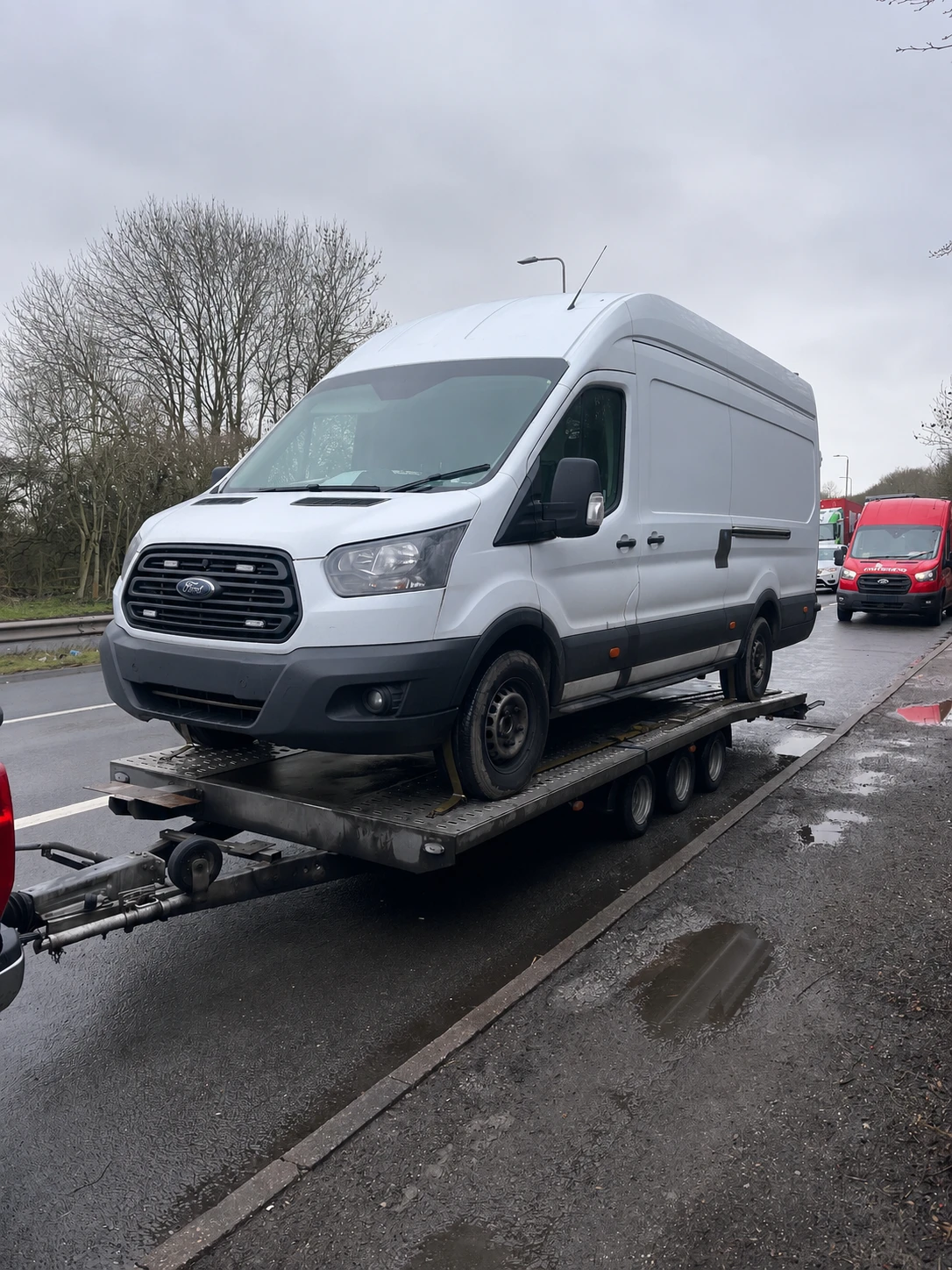
Van Recovery When the Vehicle Does Not Roll
A van that starts but cannot drive may still be straightforward to load if it selects neutral, steers correctly and rolls freely. A true non-runner can be much more complicated. Locked wheels, seized brakes, gearbox faults, electric parking brakes, damaged suspension, missing keys or accident damage may prevent ordinary winching.
Tell us which wheels are affected and whether the steering is locked. For front-wheel-drive vans, a gearbox or front-axle problem can make loading difficult. For rear-wheel-drive vans, drivetrain failure may lock the rear wheels. Four-wheel-drive vans can require additional precautions to avoid transmission damage.
Wheel skates, dollies, loading boards, extended ramps or a forklift may be needed depending on the site and vehicle. Not every recovery truck carries equipment suitable for a heavy commercial van, so this must be confirmed before dispatch. Clear photographs and honest information allow the driver to assess the safest method.
Where access is restricted by low car parks, narrow gates, soft ground or tight corners, describe the location in advance. A truck may be physically unable to enter even when it can carry the van.
Van Ditch Pull-Out and Difficult-Position Recovery
Vans can become stuck in mud, wet grass, gravel, snow, construction sites, fields, verges and sloping driveways. A simple tow may not be safe because pulling from the wrong point can damage the bumper, subframe, steering or suspension. Professional winching requires an assessment of the ground, vehicle position, anchor direction and safe recovery points.
For a van ditch pull-out Sheffield enquiry, send wide photographs showing the complete scene as well as close images of the wheels and surrounding ground. Explain how far the van has left the road, whether it is leaning, whether any wheels are suspended and whether there are obstacles such as walls, trees, fences, ditches or street furniture.
Recovery may be delayed or declined where the situation requires specialist heavy recovery, traffic management, police control, crane lifting or environmental support. Safety always takes priority over speed. Attempting to drive repeatedly while stuck can dig the wheels deeper and increase damage, so stop if the vehicle is not moving safely.
12V and 24V Van Jump Start Sheffield
Not every van breakdown needs towing. A flat or weak battery may be resolved with a suitable professional jump pack, provided the underlying problem is limited to battery charge. Many small and medium vans use 12-volt systems, while some larger commercial vehicles and specialist vehicles may use 24-volt arrangements.
Before booking a van jump start Sheffield service, provide the exact make, model, registration and engine type where known. Mention dashboard behaviour, clicking noises, dim lights and how long the vehicle has been standing. Hybrid and electric vehicles can have special procedures and should only be handled with equipment and knowledge appropriate to the model.
A successful jump start does not guarantee that the battery, alternator or charging system is healthy. If the van stops again, shows charging warnings or fails to start after boosting, transport to a garage may be necessary. Drivers do not normally diagnose complex electrical or mechanical faults at the roadside unless that service has been specifically agreed.
Van Collection and Delivery Across the UK
Van recovery is not limited to emergency breakdowns. Customers also need planned transport for recently purchased vehicles, non-taxed vans, restoration projects, workshop transfers, fleet relocations, dealership movements, vehicle returns and online purchases. We arrange local Sheffield collections and long-distance van delivery between towns and cities throughout the UK.
For scheduled transport, provide flexible collection dates where possible. Long-distance routes can be more economical when planned around driver availability and existing journeys. The collection contact and delivery contact should both be ready, with keys and access arranged. Any time restrictions, loading requirements or security procedures must be shared before booking.
Before the van is loaded, remove loose personal possessions and valuables. Secure tools, shelving and stock so they cannot move during transport. Tell the driver about fuel leaks, fluid leaks, sharp accident damage or insecure panels. At collection, photographs can record the vehicle’s visible condition, while delivery updates can help both parties coordinate handover.
Auction Van Collection and Delivery
We help arrange van transport from Copart, BCA, SYNETIQ, IAA and other vehicle auction locations. Auction vans may be runners, non-runners, accident damaged, forklift loaded, without keys or listed with incomplete condition information. The auction listing, lot number and collection rules should be checked carefully before transport is booked.
Send the auction branch, buyer or member details, lot number, vehicle registration, collection deadline and destination postcode. Confirm whether the site provides forklift loading and whether the destination can accept a non-running vehicle. Some storage compounds, private addresses and workshops cannot safely unload a van that does not roll.
Auction photographs can hide wheel, suspension or underside damage, so share the full listing rather than one screenshot. If the van is heavier, longer or more damaged than declared, a different truck may be required. Accurate information protects the customer, driver and vehicle.
Get a Price for Copart, BCA, SYNETIQ or IAA Collection
Send the auction branch, lot number, van details, collection deadline and delivery postcode for a tailored quote.
Commercial Van Recovery for Trades, Fleets and Deliveries
Reliable vans are essential to plumbers, electricians, builders, couriers, mobile technicians, catering businesses, care providers and many other organisations. A breakdown can interrupt jobs, delay customers and leave equipment stranded. Our commercial van recovery Sheffield support can be used by individual owner-drivers, small businesses, fleet operators and vehicle dealers.
For fleet work, provide the vehicle registration, fleet reference, driver contact, purchase-order requirements and authorised destination. Where repeat transport is needed, using a consistent information format improves dispatch. Businesses should also explain any site induction, loading-bay restriction, security gate, height barrier or timed access requirement.
Some commercial vehicles carry valuable or hazardous goods. The recovery driver is responsible for transporting the vehicle, not automatically the contents. Customers must disclose anything that could affect safety or legality. Overloaded vehicles, unstable loads, leaking chemicals, pressurised cylinders or unsecured machinery may need specialist handling and can be refused.
Van Recovery Throughout Sheffield and South Yorkshire
Our Sheffield van recovery coverage includes the city centre and surrounding districts such as Hillsborough, Ecclesall, Darnall, Attercliffe, Handsworth, Woodseats, Crookes, Walkley, Sharrow, Heeley, Burngreave, Manor, Gleadless, Chapeltown, Stocksbridge and nearby areas. Availability varies according to traffic, truck location, vehicle size and the equipment needed.
We also help customers travelling through Meadowhall, Sheffield Parkway, the A57, A61, A6102, A630, A616 and nearby sections of the M1. A motorway postcode is often only an approximate reference, so include the direction of travel, nearest junction, service area, marker post or live location.
Regional and long-distance transport can be arranged to and from Rotherham, Barnsley, Doncaster, Chesterfield, Worksop, Wakefield, Leeds, Manchester, Nottingham, Derby, Leicester, Birmingham and destinations across mainland Britain.
Important Checks for Safe Van Towing
Does the van roll and steer?
Confirm whether all four wheels rotate, the steering turns and the gearbox selects neutral. A van may be described as a “non-runner” but still roll easily, or it may have locked wheels that require specialist equipment. The difference affects the quote and truck selection.
Can the handbrake be released?
Manual and electronic parking brakes can remain locked after battery failure or accident damage. State whether the handbrake releases normally. Never force an electronic brake without following the manufacturer’s procedure.
Is the van empty?
Tools, materials, parcels, shelving, water tanks and fitted machinery increase weight. Tell us what the van is carrying. A vehicle that is within the transporter’s limit when empty may be overweight when loaded.
Are the wheels or suspension damaged?
Buckled wheels, broken suspension, collapsed bearings and flat tyres can make winching difficult and may damage the recovery bed. Send close photographs of visible damage and disclose if any wheel is detached or sitting at an unusual angle.
Is there enough access?
Recovery trucks need space to reverse, lower the bed and align with the van. Low car parks, narrow alleys, gated compounds and crowded streets can prevent loading. Provide photographs of the approach where access may be tight.
How many passengers need transport?
Passenger capacity is limited and must be agreed before dispatch. Do not assume that every recovery truck can carry the van’s full crew. Alternative onward travel may be required.
What Affects the Cost of Van Recovery?
Van recovery prices are calculated from more than mileage alone. The collection and delivery distance is important, but the size, weight and condition of the van can have an equal or greater effect. A compact short-wheelbase van that rolls freely may be loaded quickly, while a heavily damaged long-wheelbase van with locked wheels can require specialist equipment, additional loading time and a larger recovery vehicle.
Location also affects the quote. A van on a wide driveway with clear access is normally easier to collect than one inside a low car park, narrow alley, muddy building site or busy motorway lane. Traffic, tolls, clean-air charges, ferry crossings, waiting time and timed auction collections may also need to be considered. Long-distance jobs can sometimes be arranged at a better rate when the collection time is flexible and can be planned with an existing route.
The most accurate quote is produced when the customer sends complete information at the beginning. Changes to the model, destination, vehicle condition, load, passenger count or access after a driver has been assigned can change the price or make the booked truck unsuitable. Clear details protect everyone and reduce wasted journeys.
Pickup and delivery mileage, road type, tolls, traffic and whether the journey is local or long distance.
Wheelbase, roof height, body type, fitted equipment, tools, stock and the actual loaded weight.
Whether the van drives, rolls, steers, selects neutral and releases the handbrake.
Winches, skates, dollies, ramps, boards, forklift loading or specialist commercial recovery equipment.
Narrow roads, compounds, auctions, workshops, keys, paperwork and delays at collection or delivery.
Emergency night work, peak traffic, immediate dispatch and scheduled transport all affect availability.
Electric and Hybrid Van Recovery
Electric vans are becoming more common across delivery fleets, trades and local businesses. Models such as the Ford E-Transit, Mercedes-Benz eSprinter, Vauxhall Vivaro Electric, Peugeot e-Expert, Citroën ë-Dispatch, Renault Kangoo E-Tech, Maxus eDeliver and Volkswagen electric commercial vehicles require careful handling. Their high-voltage systems, battery location and manufacturer towing instructions can differ from conventional diesel vans.
An electric van may stop because the traction battery is discharged, the 12-volt support battery has failed, a charging fault has occurred or the vehicle has entered a protective mode. A normal jump start may only address the low-voltage system and will not recharge the main traction battery. The driver should never assume that a battery-electric van can be towed with driven wheels on the road.
Tell us that the van is electric or hybrid when requesting a quote. Provide the exact model, dashboard warning information and whether the vehicle can select neutral. If it has been involved in an accident, mention any underside impact, battery warning, smoke, unusual heat, fluid leak or visible battery damage. Vehicles with suspected high-voltage battery damage may require emergency-service or specialist hazardous-vehicle procedures rather than routine transport.
Where manufacturer guidance requires all wheels to be lifted, a flatbed transporter is normally the appropriate option. Correct loading and securing protect the drivetrain, battery system and vehicle structure. Charging cables, keys and locking-wheel equipment should travel with the van where available.
Accident-Damaged Van Recovery in Sheffield
Accident damage can make a van far more difficult to move than an ordinary mechanical breakdown. Bent steering, collapsed suspension, deployed airbags, broken glass, leaking fluids, damaged wheels and distorted body panels may all affect safe loading. After a collision, the first priority is personal safety and compliance with police or emergency-service instructions.
Once the scene has been made safe and the van is released for collection, send photographs from a safe distance. Include every side of the vehicle, the wheel positions, the road surface and any debris or barriers. Tell us whether the police, insurer or highways authority is involved and whether the van must be moved to a garage, storage compound, body shop or home address.
A recovery driver cannot always collect a severely damaged van with a standard flatbed. Vehicles resting on their bodywork, missing wheels, carrying unstable loads or positioned beyond a barrier may need heavy recovery, a crane, traffic management or specialist lifting equipment. It is better to identify this before dispatch than to send an unsuitable truck.
Personal belongings and business equipment should only be removed when it is safe and permitted. Broken glass, exposed metal and damaged batteries can create hazards. Customers should not crawl underneath a damaged van or attempt to straighten components at the roadside.
Choosing the Correct Recovery Vehicle
Different van recovery jobs need different types of transport. A standard slide-bed recovery truck may be suitable for many small and medium vans, while a larger commercial transporter or trailer may be needed for long, high or heavy vehicles. The final decision depends on legal carrying capacity as well as physical bed space.
The recovery vehicle must be able to load the van at a safe angle, secure it correctly and remain within axle and gross-weight limits. A van can physically fit on a bed but still be too heavy to carry legally. This is why approximate vehicle weight, body type and load information are essential. Manufacturer kerb weights are useful, but real operating weight can be higher because of fuel, racking, tools, stock and accessories.
Winch capacity is also important, particularly for a non-runner on a slope or soft ground. The rated winch strength does not mean every vehicle can be pulled from every angle. Cable direction, anchor points, rolling resistance and ground conditions all affect safe operation. Loading should be controlled and gradual, with the van secured using suitable wheel straps or rated restraints.
For very large commercial vehicles, recovery may fall outside ordinary van transport and require an HGV recovery operator. Declaring a vehicle as a “van” does not guarantee that it is within light-recovery limits. Iveco Daily, Mercedes Sprinter, MAN TGE, Volkswagen Crafter and box-body variants can be configured at significantly different weights.
How to Prepare Your Van for Collection
Preparation helps the recovery driver load the van safely and complete the journey without unnecessary delay. Keep the keys available, unlock the steering where possible and ensure the collection contact can answer the driver’s call. If the van is in a controlled car park, auction, depot or workshop, arrange entry permission before the truck arrives.
Remove valuable personal belongings, cash, documents and portable tools. Secure fixed equipment, drawers, ladders and loose materials. Close windows, doors, roof vents and side-loading doors where possible. If a door or panel will not latch because of damage, tell the driver so it can be assessed before transport.
Check that the destination can accept the van. A non-running vehicle should not be delivered to a location where it cannot be unloaded, pushed or stored safely. Confirm opening times with the garage and make sure someone will receive the keys. For residential delivery, reserve enough road or driveway space for the recovery truck to unload.
Do not fill the van with extra goods after receiving a quote based on an empty vehicle. Additional weight can invalidate the transport assessment. Fuel should not be transferred or stored in loose containers inside the van. Any leak, strong fuel smell or battery problem must be disclosed.
Why Customers Choose a Specialist Van Recovery Service
Van recovery is different from ordinary car towing. Commercial vehicles are longer, taller and often substantially heavier. They may carry business equipment, have reinforced suspension, use twin rear wheels or include specialist conversions. A recovery service familiar with vans is more likely to ask the right questions and arrange appropriate transport.
We focus on clear vehicle checks, suitable truck matching and practical communication. Customers are asked for postcodes, condition, wheel status, passengers and photographs before the booking is confirmed. This may take an extra moment at the enquiry stage, but it reduces the chance of a driver arriving without the equipment or capacity required.
For planned movements, collection and delivery contacts can be coordinated in advance. For emergency jobs, an estimated arrival time is provided based on the driver’s current location and road conditions. Estimates are not guarantees because traffic, accidents, weather and previous recoveries can affect travel time, but updates should be shared when circumstances change.
Customers should always keep the agreed quote, payment record and driver details. At collection, note the van’s condition and any existing damage. At delivery, inspect the vehicle where possible and raise concerns promptly. Good documentation protects both the customer and transport provider.
Van Recovery Sheffield FAQs
Do you provide van recovery near me in Sheffield?
Yes. We arrange local van recovery throughout Sheffield and nearby South Yorkshire, subject to suitable truck availability, access and the vehicle’s size and condition.
Can you recover SWB, MWB and LWB vans?
Yes, many short, medium and long-wheelbase vans can be transported. Extra-long, high-roof or heavily loaded vans require dimensions and weight checks before booking.
Can you recover a Mercedes Sprinter or Volkswagen Crafter?
Yes, suitable Sprinter, Crafter and similar large-van recovery can be arranged when the exact wheelbase, body length, weight, condition and access are confirmed.
Do you tow Ford Transit vans?
Yes. Recovery can be arranged for Transit Courier, Transit Connect, Transit Custom, full-size Transit and selected specialist bodies, subject to vehicle specifications.
Can you recover a van with locked wheels?
Potentially. Locked wheels may require skates, dollies or specialist equipment. Tell us which wheels are locked and send photographs before a truck is dispatched.
Can you recover a loaded van?
Possibly, but the load must be declared. Tools, stock and fitted equipment increase the vehicle’s weight and may require a larger recovery vehicle.
Do you provide motorway van recovery?
Yes, recovery can be arranged from accessible motorway locations. Share the motorway, direction, nearest junction, marker or live location and first move to a safe place.
Do you offer 12V and 24V van jump starts?
Jump-start assistance may be available for suitable 12-volt and 24-volt vehicles. The exact van model and electrical system must be confirmed.
Can you collect a van from Copart or BCA?
Yes. Send the auction branch, lot number, buyer details, collection deadline, vehicle condition and destination postcode.
Can you transport a non-taxed or uninsured van?
A van carried on a suitable recovery vehicle may be transported without being driven on the road, but the customer remains responsible for ownership, documentation and legal compliance.
How quickly can a recovery truck arrive?
Arrival times depend on traffic, location, van size, equipment and current driver availability. An estimated arrival time is provided when the job is assessed.
What details are needed for a quote?
Send the make, model, registration, pickup and drop-off postcodes, van condition, wheel and handbrake status, number of passengers, load information and clear photographs.
Vehicle and Journey Links
Need Van Recovery in Sheffield?
Send your van make and model, pickup and destination postcodes, vehicle condition, wheel status, passenger count and clear photographs. We will assess the job and provide a quote and estimated arrival time based on suitable recovery availability.